About
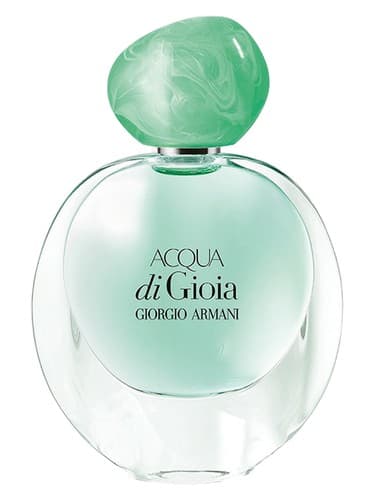
Acqua di Gioia by Giorgio Armani is a Floral Aquatic fragrance for women. Acqua di Gioia was launched in 2010. Acqua di Gioia was created by Loc Dong, Anne Flipo and Dominique Ropion. Top notes are Amalfi Lemon and Mint; middle note is Water Jasmine; base notes are Virginia Cedar, Brown sugar and French labdanum. Acqua di Gioia is a new fragrance by Giorgio Armani, presented in March 2010. Seductive sea aromas in the new fragrance are put into first plan and used as creators' inspiration. Composition of the perfume is compared with woman who is ''strong, dignified and free spirit but in perfect harmony with nature''. Inspired by several summer holidays spent on the islands of Pantelleria and Antigua, where Armani has his villas, the fragrance was lead by the idea of escape into nature, a heavenly place of real holiday where we restore the energy necessary to body and soul, and where we create natural balance. Its flacon was made as a natural shape – water drops which are clear, airy, and pellucid. The fragrance arrives on the market in June 2010 as a blend of refreshing notes of crushed mint leaves and lemon Limone Primo Fiore Femminello from Calabria. Structure of the composition pushes the limits from fresh citruses to a floral heart which encompasses aquatic jasmine, dewy peony and pink pepper, while a base closes with cedar, yellow sugar and labdanum. Acqua di Gioia was created by three perfumers: Loc Dong, Anne Flipo and Dominique Ropion, who see it as Eve's seduction and as fragrance turned completely towards the nature. The perfume can be purchased as 30, 50 and 100 ml EDP, along with 200 ml body lotion.
Fragrance Notes
Accords
aromatic
citrus
green
white floral
fresh spicy
woody
fresh
When to Wear
Best Seasons
Time of Day
☀️Day32%
🌙Night5%
Where to Buy
This site contains affiliate links. As an Amazon Associate and partner of other retailers, we earn from qualifying purchases at no extra cost to you.
Community Review
A Mediterranean Summer in an Underrated Bottle — Acqua di Gioia by Giorgio Armani
The Verdict
Acqua di Gioia by Giorgio Armani launched in 2010 — a women's fragrance created by Loc Dong, Anne Flipo, and Dominique Ropion, inspired by Armani's summers on Pantelleria and Antigua. With 16,592 votes and a 3.93 average, it sits slightly below the community's highest enthusiasm threshold, but the numbers understate a fragrance that has a genuinely dedicated following. The community positions it as consistently underappreciated: "Acqua di Gioia gets a lot of unwarranted hate, dismissed as being too basic or shampoo-y, but it really is a fantastic fragrance — a freshie classic, and deservingly so."
What It Smells Like
The opening is fresh and immediately evocative: Lemon and Mint arrive together in a cool, bright combination that reads as genuinely aquatic rather than artificial. The mint here is not the harsh spearmint found in some fragrances — it's soft, almost cooling, complementing the citrus without dominating. The heart is primarily Jasmine — a water jasmine accord that stays light and clean rather than heavy or indolic. The base resolves quietly with Labdanum, Cedar, and Brown Sugar, providing a soft warmth that prevents the fragrance from feeling purely clinical. The sugar note is subtle — it rounds the dry-down without tipping into sweetness.
The overall effect is coastal and clean: lemon zest, fresh jasmine, warm cedarwood. Community descriptions include "a serene coastal escape," "invigorating and refreshing," and "energizing and sensual at the same time." It does not smell complex. It smells beautiful, and those are different things.
When to Wear It
This is unambiguously a spring and summer fragrance, designed for warm weather, and it excels in exactly those conditions. The fresh aquatic character disappears in cold air rather than gaining depth. For daytime office wear in spring, it's near-ideal: fresh, inoffensive, professional. For beach, outdoor events, and warm-weather casual occasions, it is exactly right. Do not wear it expecting presence in the evening.
Longevity & Projection
The community's honest verdict: moderate at best. Most reviewers report 4–6 hours of perceptible wear on skin, with the scent "staying on you just okay — not all day and night but enough to get noticed." Projection is close from the start — "not a strong projecting fragrance," but it remains detectable throughout its wear. Spraying on clothing meaningfully extends both duration and sillage. For a casual daytime summer fragrance, this performance level is acceptable; for those expecting full-day coverage, it will disappoint.
The Community Says
The fragrance occupies an interesting position: widely liked but rarely cited as anyone's absolute favorite. No one smells it and finds it offensive; many smell it and find it lovely. "Everyone and their dog will like it" — the community's gentle way of saying it's pleasant but not exciting. The criticism from fragrance enthusiasts tends toward finding it too safe, too simple, too easy. The counterargument holds: "it's both energizing and sensual at the same time," and that combination is harder to achieve than it looks. The mint-jasmine-cedar arc is clean without being soulless.
Who Should Buy This
Acqua di Gioia is an ideal warm-weather fragrance for someone who wants something fresh, feminine, and versatile without drama. It suits women who prefer clean aquatic-florals to heavier orientals, and those who want a daytime office fragrance that will never cause complaints. It is not for the fragrance enthusiast seeking depth, complexity, or longevity. At discounted prices — which are common for this fragrance — it's an easy recommendation for summer. At full retail, sampling first is sensible.
The Bottom Line
Acqua di Gioia is a quietly excellent summer fragrance that suffers primarily from being straightforward in a hobby that rewards eccentricity. The mint-jasmine-cedarwood construction is genuinely good, not just safe, and the Mediterranean inspiration translates into something that actually smells like those summers rather than just claiming to. It's not a fragrance that demands attention — it simply makes you smell like you've spent your morning somewhere pleasant. For many occasions, that's exactly enough.
Consensus Rating
7.8/10
Community Sentiment
mixedSources Analyzed
25 community posts (10 Reddit) (15 forum)
This review is based on analysis of 25 community discussions. Individual experiences may vary.