About
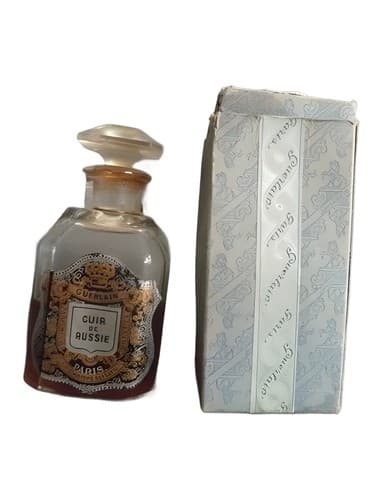
Guerlain introduced Cuir de Russie in 1872, a Leather unisex fragrance crafted by Betty Busse. The composition opens with lavender, rosemary, thyme. The middle unfolds with iris, labdanum, birch, styrax, benzoin. A foundation of vetiver, musk, oakmoss, amber, civet, resins anchors the dry down.
Fragrance Notes
Accords
amber
woody
aromatic
musky
powdery
earthy
iris
animalic
leather
fresh spicy
When to Wear
Best Seasons
Time of Day
☀️Day19%
🌙Night19%
Where to Buy
This site contains affiliate links. As an Amazon Associate and partner of other retailers, we earn from qualifying purchases at no extra cost to you.
Community Review
Aime Guerlain's 1872 Russian Leather - the founding document of the Cuir de Russie genre and ancestral DNA of Shalimar. A vintage-only historical artifact with smooth civet-oakmoss depth.
The Verdict
Guerlain's Cuir de Russie was composed in 1872 by Aimé Guerlain — nearly 50 years before Chanel's famous interpretation of the same concept. It predates aldehydes. It predates most of what we consider "classical" French perfumery. It is, in every meaningful sense, a foundational document: one of the first documented Russian Leather fragrance types, and a direct ancestor of the civet-musk character that would eventually find expression in Shalimar. The community that has encountered it rarely forgets it. Most fragrance enthusiasts will never smell it, and that is a genuine loss.
What It Smells Like
The notes describe a complete olfactory portrait: Lavender, Rosemary, and Thyme open the composition — a classic aromatic herbal triad that gives the opening a slightly medicinal, bracing quality. This is not softened or sweetened; it hits with the directness of a 19th-century formula that had no interest in approachability.
The heart develops around Iris, Birch, Benzoin, Labdanum, and Styrax. The birch provides the signature Russian Leather character — that characteristic tar-edged, slightly smoky quality. But unlike some birch-heavy leather compositions, this one wraps the tar in Iris and the sweet resins of benzoin and styrax, creating what one expert reviewer described as "a cross between Chanel's Cuir de Russie and Jicky's drydown — supple, tactile, a little smoky."
The base is dense: Civet, Oakmoss, Musk, Amber, Vetiver, and Resins. The civet is the most discussed element — described by community members as "smooth and rich" rather than harsh, and closer to "vanilla-like" than animalic in the vintage formula. The accords confirm an amber-forward profile with woody, aromatic, musky, powdery, earthy, iris, animalic, and leather elements — essentially a complete vocabulary of classic masculine perfumery.
One Basenotes reviewer described it as "silky smooth, like a precious wine aging and just getting better." Another characterized it as "a soft, powdery leather to be worn by a gentleman."
When to Wear It
Fall, winter, and spring. The depth of the composition — heavy resins, civet, oakmoss — belongs to cool weather. Summer would amplify the animalic elements uncomfortably. This is a coat-weather fragrance, an indoor or cold-outdoor experience.
The community notes a balance between masculine and feminine that makes it genuinely unisex in the historic sense — not the modern "clean unisex" but the classical "this transcends gender categorization because the concept of gendered fragrance didn't fully exist when it was created."
Longevity & Projection
Fragrantica community rates longevity at 3.73 out of 5 and sillage at 3.02 out of 4 — strong for any formula, remarkable for something from 1872. The civet and oakmoss base is tenacious; natural musks from the 19th century cling to fabric and skin in ways that synthetic substitutes do not replicate. Wearers report the base persisting long after the opening notes have completed their journey.
Performance varies significantly depending on the age and provenance of the vintage stock. Older bottles, properly stored, reportedly perform better than deteriorated examples.
The Community Says
The community reaction to Cuir de Russie is characterized by reverence bordering on awe. "A great honor to review this classic" appears in multiple forms across different reviewers. Those who have accessed Osmothèque samples or well-preserved vintage bottles describe the experience as encountering a historical artifact that is also genuinely wearable.
One expert comparison: the opening is "properly bitterish with herbs, galbanum, and oakmoss" before veering into "a much more supple finish, poised between masculine and feminine." The progression from sharp aromatic opening to powdery leather is described as the fragrance's most compelling feature.
The dissenting view is rare but honest: a "urinal cake" comparison appears from those who find the civet base too animalic for modern sensibilities. That reaction is predictable and valid — raw civet-forward formulas simply don't match the aesthetic preferences of most contemporary fragrance wearers.
The community's strongest consistent note: "Guerlain must release this gem once again." Its historical significance to the house's DNA — as precursor to Shalimar's development — makes its absence from the catalog a genuine cultural gap.
Who Should Buy This
Serious vintage fragrance collectors and Guerlain historians will pursue this with appropriate conviction. A sample from the Osmothèque is apparently possible; finding authentic vintage stock requires patience and research.
Those who love Mitsouko, Jicky, Shalimar, or any civet-and-oakmoss-anchored classic will find the genealogical connection immediately apparent. This is where those fragrances came from.
Budget is not really the question — availability is. If you encounter authentic vintage stock at any reasonable price, the community consensus is that it's worth acquiring.
The Bottom Line
Guerlain's Cuir de Russie from 1872 is the founding document of Russian Leather perfumery from one of the world's great fragrance houses — and it has been largely forgotten. The community that has encountered it describes something smooth, animalic, and historically irreplaceable: a "soft, powdery leather for a gentleman," with the civet and oakmoss base that would eventually become the foundation of Shalimar's drydown. That it remains inaccessible to most fragrance enthusiasts is one of the genuine losses in the contemporary market.
Consensus Rating
8.2/10
Community Sentiment
positiveSources Analyzed
4 community posts (3 Reddit) (1 forum)
This review is based on analysis of 4 community discussions. Individual experiences may vary.