About
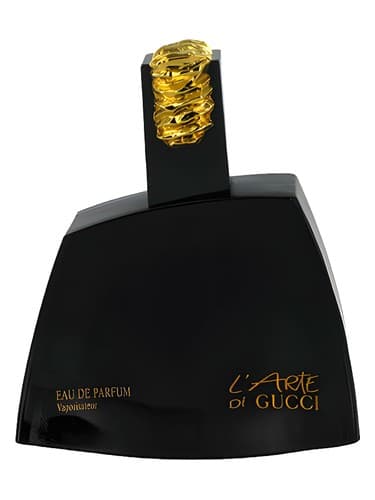
L'Arte di Gucci is a Chypre Floral women's fragrance from Gucci, launched in 1991. The composition opens with neroli, rose, marigold, chamomile, currant leaf and bud. The heart develops around ylang-ylang, patchouli, mimosa. The dry down features musk, labdanum, sandalwood, castoreum.
Fragrance Notes
Top Notes
First impression (15-30 min)
Middle Notes
Heart of the fragrance (2-4 hrs)
Base Notes
Dry down (4+ hrs)
Accords
rose
woody
patchouli
floral
aromatic
balsamic
musky
warm spicy
earthy
yellow floral
When to Wear
Best Seasons
Time of Day
☀️Day14%
🌙Night26%
Where to Buy
This site contains affiliate links. As an Amazon Associate and partner of other retailers, we earn from qualifying purchases at no extra cost to you.
Community Review
The Rose Chypre That Should Not Exist — L'Arte di Gucci by Gucci
The Verdict
L'Arte di Gucci, created by Steve DeMacado and released in 1991, is a discontinued vintage rose chypre that has quietly accumulated one of the strongest reputations in the fragrance community for a fragrance so difficult to actually obtain. It was discontinued around 2007 — likely a casualty of IFRA regulations restricting oakmoss combined with a market that had pivoted decisively toward aquatic freshness — and the fragrance world mostly missed it until collectors started talking about what they'd found. The result is a fragrance that earns a 59% love rate and a 4.40 average across 516 votes, which is extraordinary for something you can't find in any department store.
What It Smells Like
L'Arte di Gucci opens with a dense, complex veil: Neroli, Rose, Marigold, Chamomile, and Currant Leaf and Bud all announce themselves in the first minutes, accompanied by a layer of aldehydes and coriander that gives the opening its slightly soapy, vintage quality. There's a green bitterness here, a layer of sweet fruit jam, and beneath it all the unmistakable structure of an oakmoss chypre beginning to unfurl.
The heart develops into one of the great rose compositions of late 20th century perfumery: Ylang-Ylang, Patchouli, and Mimosa join the rose and the result is dark, earthy, and unapologetically animalic. One critic described it as "a rose wearing all black, with high cheekbones and a beckoning glare." Another, more atmospherically, wrote that "dirt, leather, and the tiniest bit of rot join the rose and coriander" as the middle opens. The EDP version is described as going "full-on gothic rose from the outset," while the EDT opens with more brightness before meeting the same inevitable destination.
The base — Musk, Labdanum, Sandalwood, and Castoreum — anchors everything in a warm, amber-sweetened oakmoss cushion. The castoreum provides a leather-adjacent animalic quality that IFRA regulations have made essentially impossible to replicate at original concentrations today.
The full accord picture (rose, woody, patchouli, aromatic, balsamic) is accurate but insufficient — this fragrance is more than its parts, which is what makes it special.
The Chypre Context
Understanding L'Arte di Gucci requires understanding what a rose chypre is and why you can't easily make one now. The chypre structure — oakmoss, labdanum, bergamot at its simplest — was effectively outlawed by IFRA's restrictions on oakmoss and treemoss due to sensitization concerns. The deep, mossy, slightly bitter foundation that made classic chypres feel like forest floors and old libraries cannot be replicated with current ingredients at similar concentrations. Vintage bottles of L'Arte di Gucci, especially pre-IFRA-restriction stocks, carry this structure intact. That is part of what collectors are chasing when they search for sealed bottles.
When to Wear It
This is unambiguously a cool-weather and evening fragrance. Fall and winter are the natural home — the dark rose and animalic base amplify beautifully in cool air and feel too heavy in summer heat. Community voting confirms the evening bias: 26% night versus 14% day preference. Special occasions, dinner parties, and anything requiring serious olfactory presence are the right contexts. One reviewer's note that you "better know what you're doing when you wear something like L'Arte" is both accurate and fair warning.
Longevity & Projection
Vintage formulations of this style project with authority and last for hours — often 8 to 12 hours on skin, with substantial trail. The oakmoss base ensures the drydown lingers well into the next day on clothing. Well-preserved bottles of the original formulation perform at a level that most modern fragrances cannot match, partly because of ingredient restrictions and partly because the material quality in 1991 high-end perfumery was simply different.
The Community Says
A 59% love rate for any fragrance is remarkable. For a fragrance that requires hunting through secondary markets, vintage dealers, and estate sales to find, it's nearly unprecedented. The community response divides along predictable lines: enthusiasts of vintage perfumery call it "one of the greatest rose chypres of all time" and "certainly one of the best releases from Gucci, past and present." Those newer to vintage fragrances note that it "smells very retro" and that partners have been known to describe it as "an old woman's perfume" — which is, of course, exactly the kind of boldness that vintage chypre enthusiasts are seeking.
Where to Find It
Secondary market platforms (eBay, Etsy, Fragrantica's marketplace) and specialist vintage fragrance dealers are the primary sources. Prices have risen as collector interest has grown and stock has depleted. Both the EDT and EDP concentrations surface periodically, as do parfum concentrations. Check seals and provenance carefully — vintage fragrance authentication matters for both quality and longevity.
Who Should Buy This
L'Arte di Gucci is for the fragrance collector who has moved past designer current releases and wants to understand what the classical tradition of chypre perfumery smelled like at its peak. It is for anyone who loves Paloma Picasso Mon Parfum, Niki de Saint Phalle, or Ungaro Diva and wants a rose-forward variant. And it is, categorically, for the adventurous wearer who finds most modern fragrances too polished and inoffensive.
It is not a casual purchase, not an entry-level experience, and not appropriate for those who find the vintage animalic character of castoreum and natural oakmoss off-putting.
The Bottom Line
L'Arte di Gucci is what happens when a house with resources and a perfumer with courage create a rose chypre at the end of an era when such things were still possible at full strength. It came too late for the 1980s market it would have dominated and too early for the vintage revival that now prizes it. Finding a well-preserved bottle is increasingly difficult and expensive. Wearing it is a lesson in what the 20th century's greatest perfumery tradition smelled like at its most confident.
Consensus Rating
9.1/10
Community Sentiment
positiveSources Analyzed
4 community posts (2 Reddit) (2 forum)
This review is based on analysis of 4 community discussions. Individual experiences may vary.