About
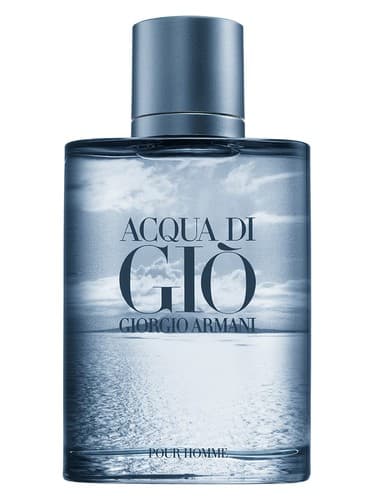
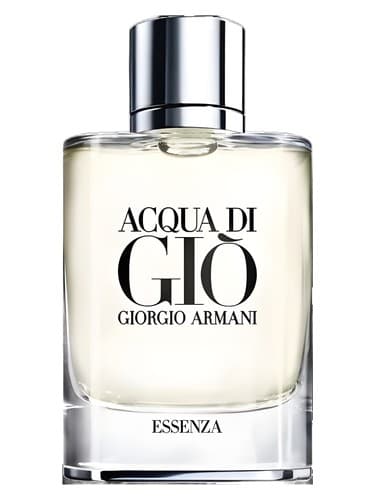
Giorgio Armani introduced Acqua di Gio Essenza in 2012, a Woody Aquatic men's fragrance crafted by Alberto Morillas. The composition opens with bergamot, grapefruit, water, calone. The middle unfolds with jasmine, sage, basil, floral notes. The base resolves into vetiver, musk, patchouli, cedar, amber, pepper, clary sage, ambergris.
Fragrance Notes
Accords
aromatic
fresh spicy
citrus
fresh
aquatic
woody
floral
amber
green
herbal
When to Wear
Best Seasons
Time of Day
☀️Day26%
🌙Night10%
Where to Buy
This site contains affiliate links. As an Amazon Associate and partner of other retailers, we earn from qualifying purchases at no extra cost to you.
Community Review
The One That Got Away — Acqua di Gio Essenza by Giorgio Armani
The Verdict
Acqua di Gio Essenza was discontinued before most people understood what it was. Released in 2012 as a darker, more complex counterpart to the original Acqua di Gio pour Homme — itself one of the most influential men's fragrances ever made — Essenza was positioned as the "essence" of the line: more concentrated, more sophisticated, and more serious than its ubiquitous parent. It never outsold the original. Profumo, released in 2015 with stronger marketing, ultimately took the "mature AdG" positioning in the mainstream. By the time Essenza was discontinued, its reputation had already begun to grow among enthusiasts who recognized what it was doing differently.
Today, Essenza is one of the most discussed discontinued designer fragrances in online communities. It has a cult that has only grown in its absence, with community members describing it as "the pinnacle of the Acqua di Gio line" and backing up multiple bottles on secondary markets. The community's 56% love rating and 4.33/5 average on Fragrantica — both extraordinary numbers for a designer fragrance with nearly 2,850 votes — reflect genuine appreciation rather than simply discontinuation sentiment.
Crafted by Alberto Morillas, the same nose behind the original, the note profile expands the original's aquatic framework with Pepper, Patchouli, Jasmine, Sage, Basil, Cedar, Amber, and Ambergris — creating a composition that is still recognizably Acqua di Gio but with genuine depth, spice, and a more complex base than the clean-marine simplicity of the original.
What It Smells Like
The opening is familiar if you know the original, and immediately more interesting. Bergamot and Grapefruit lead alongside Calone — the aquatic aromachemical responsible for the "ocean breeze" quality that defined Acqua di Gio and the entire 90s aquatic genre. But where the original deploys Calone as a central character, Essenza treats it as a supporting element. Water Notes are present in the opening, but they function as freshness rather than subject matter.
What distinguishes the first phase is the addition of Basil and Sage — aromatic herbs that add a green, slightly medicinal sharpness to the marine freshness. The opening reads as "Acqua di Gio that has grown up," which multiple community members describe as the most accurate one-line summary.
The heart development is where Essenza separates from the original most dramatically. Jasmine, Floral Notes, and Sage create a composition that is warmer and more complex than any prior iteration of the line. The jasmine is not sweet or perfumey — it's dry and slightly dark, integrating with the herbal notes to create a structured, sophisticated heart that community reviewers call "intensely carnal and sensual" while still maintaining the fresh orientation of the original.
The base is the decisive argument for Essenza's superiority among its advocates. Patchouli, Pepper, Cedar, Vetiver, Amber, and Ambergris create a finish that is simultaneously mineral, warm, and deeply woody. The ambergris adds a particular quality that reviewers describe as "a sharp mineralic edge" coming in after the heart. The community consensus is that the base gives Essenza a longevity and presence the original fundamentally lacks.
It is worth noting one criticism that appears independently in multiple reviews: at some stage in the drydown, certain skin types detect an unpleasant metallic or sulfuric note from the specific combination of aromachemicals in the base. This is a known phenomenon with some synthetics at low concentrations. It's not universal, but it appears consistently enough in community reviews to be worth mentioning.
When to Wear It
Spring is where Essenza performs best — the green herbs and light aquatics breathe perfectly in moderate temperatures. Many community reviews specifically describe it as the ideal spring fragrance. Summer works well with lighter application. The community also notes year-round signature scent potential, pointing to its versatility from casual to office settings.
Daytime use is primary — community vote data shows 26% day preference vs 10% night, which is unusual for a composition with this depth. Essenza has a daytime freshness that doesn't require darkness to function, despite its complexity.
Longevity & Projection
This is one of the defining arguments for the fragrance. Community reports consistently clock 10-12 hours on skin, with projection that remains active for 4-6 hours before settling into an intimate sillage. On clothing, the scent has been reported to remain detectable for days — multiple reviewers mention this specifically.
For a composition marketed in the designer aquatic space, these numbers are exceptional. The original Acqua di Gio EDT is famously moderate in performance; Essenza sits at the opposite end of the longevity spectrum. The patchouli and ambergris base are largely responsible.
The Community Says
The community is divided into two groups: those who believe Essenza is among the greatest modern designer fragrances ever produced, and a smaller contingent who argue that Profumo (which replaced it) is objectively better and that Essenza's reputation is inflated by discontinuation nostalgia.
The devotees are passionate. "Armani broke our hearts by discontinuing this gem," appears in some form in nearly every Basenotes thread on the subject. One reviewer called it "the best of all the line by far in all aspects." The characterization of it as a "unicorn" that collectors hunt for is accurate — it genuinely commands secondary market prices that reflect scarcity rather than comparable alternatives.
The skeptics make a fair point: "The same can often be said about any discontinued fragrance that has the unfortunate burden of being labelled a masterpiece by the talking heads of the online community." Profumo is available, consistently priced, and well-regarded. The question is whether Essenza's specific combination of herbal freshness, jasmine heart, and ambergris base offers something Profumo doesn't — and on that question, enthusiasts and skeptics disagree completely.
Who Should Buy This
For committed Acqua di Gio fans and fragrance collectors who want to understand what the line could have been. The secondary market price has risen significantly — current listings range from $150-300+ for a 75ml bottle depending on condition and provenance. At those prices, sampling first through reliable decant sources is essential.
Also for buyers in the aquatic-aromatic space who want the best version of that genre from the designer tier. The combination of freshness, herbal complexity, and long-lasting woody-amber base is executed with genuine skill that holds up against fragrances twice its original price point.
Skip it if you're looking for an affordable daily wear option — the discontinued status and premium secondary market pricing make it impractical as a fragrance you'll use daily without financial anxiety. Profumo scratches a similar itch with reliable availability and consistent pricing.
The Bottom Line
Acqua di Gio Essenza is simultaneously a genuinely excellent fragrance and a cautionary tale about how the market values what it loses. If it were still in production at its original price, it would be considered one of the best designer aquatic-aromatic releases of the 2010s. Because it isn't, it has become something slightly mythologized — and it has earned at least some of that mythology. Approaching it with clear eyes: the fragrance is excellent, the secondary market is expensive, and sampling before paying inflated prices is not optional.
Consensus Rating
9/10
Community Sentiment
positiveSources Analyzed
7 community posts (3 Reddit) (4 forum)
This review is based on analysis of 7 community discussions. Individual experiences may vary.