About
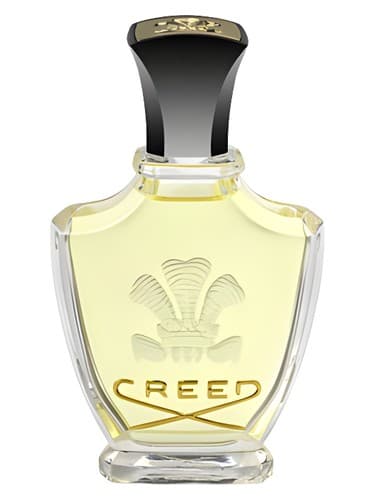
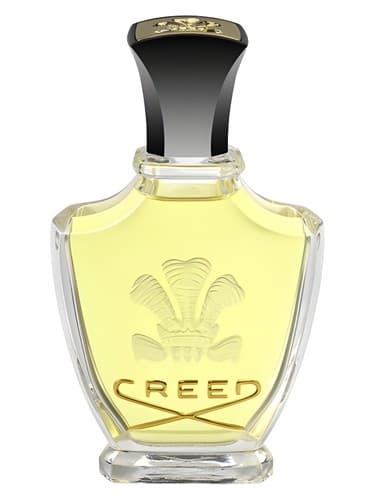
Creed introduced Fantasia de Fleurs in 1862, a Floral women's fragrance crafted by Henry Creed Third Generation. The composition opens with bergamot. The middle unfolds with iris, rose. Ambergris close the composition.
Fragrance Notes
Accords
rose
amber
iris
citrus
animalic
powdery
floral
violet
earthy
balsamic
When to Wear
Best Seasons
Time of Day
☀️Day22%
🌙Night16%
Where to Buy
This site contains affiliate links. As an Amazon Associate and partner of other retailers, we earn from qualifying purchases at no extra cost to you.
Community Review
Fantasia de Fleurs delivers a rose and amber experience best suited to spring and fall. With strong community approval and a well-constructed composition, it earns a confident recommendation from the Creed stable. Worth trying if the note profile appeals to you.
The Verdict
Creed's historical claims should be taken with skepticism—the house's habit of attaching royal commissions and eighteenth-century dates to modern formulations is well-documented—but the claim that Fantasia de Fleurs was created in 1862 for Empress Elisabeth of Austria has a certain appropriateness to it regardless of its accuracy. This is a fragrance that smells like something that belongs to a different century.
The community rating of 4.01 out of 5 across 387 votes reflects a fragrance that has genuine admirers and genuine detractors, often for the same reason: it contains a pronounced animalic quality derived from its ambergris that either reads as elegant historical complexity or as something frankly urinous, depending on skin chemistry and personal tolerance.
This is not a neutral fragrance, and it does not try to be. That is both its strength and its limitation.
What It Smells Like
The opening bergamot is brief—a flash of citrus that serves mainly to introduce what follows. Within minutes, jammy Bulgarian rose takes over: lush, rich, and slightly fruity rather than green or dewy. This is rose as a fully expressed bloom rather than a fresh-picked petal. Alongside it, iris provides dry, earthy contrast—the powder of orris root rather than the sweetness of violet.
The combination of rose and iris here is classical: these two materials have been paired in French perfumery for well over a century, and Fantasia de Fleurs wears that tradition openly. There is a powdery, slightly dusty quality in the heart that some describe as "petals in a garden heated by afternoon sun" and others describe as "an elderly woman's dressing table."
The ambergris in the base is where things get complicated. Creed's use of ambergris tends to be generous, and here it introduces a warmth that can tip into animalic territory. On certain skin types this is deeply sensual—a biological warmth that makes the rose and iris feel more alive. On others, particularly in warmer conditions, the combination reads as slightly urinous or musty in a way that breaks the botanical illusion entirely.
Longevity on fabric is exceptional—this is the kind of fragrance that clothes remember for days.
When to Wear It
Fantasia de Fleurs is a cool-weather floral. The rose and iris work beautifully in spring and fall temperatures, where the warmth of the ambergris feels appropriate and the projection stays controlled. Summer heat amplifies the animalic quality in ways that most wearers will find challenging.
It suits occasions that match its character: afternoon cultural events, garden parties before the heat sets in, museum visits. It has the pace of a long walk rather than a night out.
Longevity & Projection
Performance is strong—longevity runs six to ten hours on skin, and the projection in the opening hour is noticeable without being aggressive. The fragrance settles into a closer wearing after a few hours, which is appropriate to its character. The fabric longevity is remarkable: this is one of those fragrances where a scarf worn once will retain the impression for weeks.
The Community Says
Admirers reach for elevated comparisons. One reviewer described it as "standing in a botanical garden that hasn't been manicured in fifty years—the roses are too full, the earth is too present, and it is absolutely beautiful." Another called the combination of rose, iris, and ambergris "Victorian restraint meeting something fundamentally hormonal."
The detractors are equally emphatic. The ambergris-on-skin reaction splits the community cleanly. Multiple reviewers have flagged the urinous outcome, particularly in summer or on certain skin types, as a dealbreaker. One commenter summarized it as "a fragrance that seems magnificent for the first twenty minutes and then does something irreversible."
The question of whether Fantasia de Fleurs is still being produced is worth raising: availability has become inconsistent, and some community members suspect it may have been quietly discontinued.
Who Should Buy This
Fantasia de Fleurs is for the fragrance wearer who has already made peace with animalic and historical character—someone who has worn Femme de Rochas or Dioressence and found them compelling rather than alarming. If your preferences run toward clean modern florals or bright fresh compositions, this will likely disappoint or disturb.
Skin testing is not optional here. The ambergris reaction is real and cannot be predicted from the fragrance description alone. Find a sample before committing to a bottle.
The Bottom Line
Fantasia de Fleurs is a legitimately beautiful rose fragrance with a difficulty built into it that prevents easy recommendation. The rose-iris-ambergris accord is historically coherent and can be magnificent. The animalic quality that makes it interesting to some will make it unwearable for others. Sample carefully, wear it in cool weather, and accept that this is a fragrance that demands a specific wearer—but for that wearer, it is something genuinely rare.
Consensus Rating
8/10
Community Sentiment
positiveSources Analyzed
4 community posts (2 Reddit) (2 forum)
This review is based on analysis of 4 community discussions. Individual experiences may vary.