About
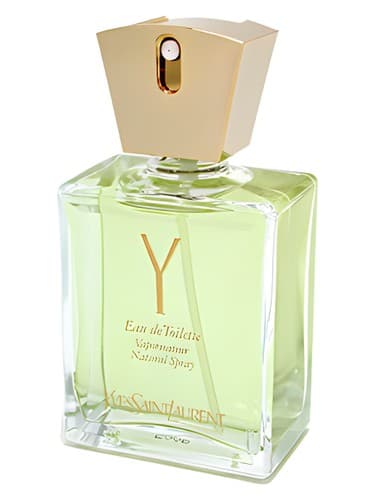
Michel Hy created this chypre fruity composition for Yves Saint Laurent in 1964, designed for the sophisticated woman. It stands as one of the house's early feminine creations, reflecting the refined elegance of 1960s haute couture perfumery. The opening introduces aldehydes, green notes, galbanum, honeysuckle, peach, gardenia, and mirabelle plum. A lavish floral heart features hyacinth, orris root, ylang-ylang, jasmine, tuberose, and Bulgarian rose. The base rests on oakmoss, civet, vetiver, patchouli, sandalwood, benzoin, styrax, and amber.
Fragrance Notes
Top Notes
First impression (15-30 min)
Middle Notes
Heart of the fragrance (2-4 hrs)
Accords
green
white floral
earthy
woody
aldehydic
mossy
floral
fruity
powdery
amber
When to Wear
Best Seasons
Time of Day
☀️Day27%
🌙Night10%
Where to Buy
This site contains affiliate links. As an Amazon Associate and partner of other retailers, we earn from qualifying purchases at no extra cost to you.
Community Review
YSL's 1964 debut fragrance is a magnificent green chypre built on galbanum, oakmoss, and civet that represents one of perfumery's great lost treasures, revered by vintage enthusiasts but largely unknown to modern audiences.
The Verdict
YSL's Y, created by Michel Hy in 1964, holds the distinction of being the house's first-ever fragrance. Yet despite this historical significance, it remains one of perfumery's most overlooked masterpieces -- never heavily marketed even during its production years, and now largely unknown to a generation familiar only with the modern men's Y line that shares its letter but nothing else.
For those who have experienced the vintage formulation, Y represents a pinnacle of the green chypre tradition. It is, in the words of multiple vintage experts, one of the greatest green, patchouli-forward multi-floral chypres ever created. The modern reissue (La Collection Y) exists but is widely considered a pale, thin floral that merely gestures at the original's complexity.
What It Smells Like
The opening is a dramatic statement of intent. Cold, herbal galbanum erupts alongside sparkling, golden aldehydes, creating what reviewers describe as the smell of damp grass and sunshine. Green notes reinforce the vegetal sharpness, while honeysuckle and peach soften the entry with touches of sweetness. Gardenia and mirabelle plum add a fruity-floral brightness that prevents the green blast from becoming austere.
The heart is a lavish floral arrangement of remarkable depth. Hyacinth, orris root, ylang-ylang, jasmine, tuberose, and Bulgarian rose create a bouquet that is simultaneously lush and structured. There is a flirty, coquettish quality to the floral heart that reviewers describe as slightly sweeter than expected, providing an alluring contrast to the sharp green opening.
The base is where Y reveals its true vintage grandeur. Oakmoss dominates -- one reviewer declared it smells like "oakmoss juice" -- while civet adds the lewd, animalic undercurrent that became a signature of YSL fragrances through the 1980s. Vetiver and patchouli deepen the earthy character, sandalwood adds smoothness, and benzoin and styrax provide balsamic sweetness. The vintage parfum contains a particularly hefty dose of civet that creates a whisper of rose, civet, and patchouli in the final drydown.
When to Wear It
Despite its chypre classification, Y reads more as a spring-to-autumn fragrance than a winter one. Its green-aldehydic opening and floral heart suit temperate weather, while the mossy, animalic base provides enough substance for cooler evenings. One reviewer memorably wore it to a Studio 54-themed party, describing it as the ideal choice for glamorous occasions where it "helped maintain composure."
Formal evening events, cultural evenings, and sophisticated dinners are its natural territory. This is not a casual fragrance.
Longevity & Projection
Vintage formulations of Y are reported to have excellent longevity and substantial projection. The concentration of oakmoss, civet, and patchouli in the base creates a foundation that persists for many hours, especially in the parfum concentration. The aldehydic opening projects well initially, and the mossy base maintains a noticeable aura.
Modern versions and the La Collection reissue perform significantly less well, reflecting both reformulation and the reduced presence of restricted materials like oakmoss and civet.
The Community Says
Those who know Y tend to revere it. Vintage experts describe it as containing "the best of green florals and grassiness, a smart fruit choice, a confident dose of moss and just enough darkness in the basenotes to make it meld with your skin." Basenotes reviewers praise the "blast of Galbanum and Fine Quality Citrus" that opens into "a dramatic Aldehydic Cloud" with a powerful bouquet. The civeted finish is noted as the hallmark that links Y to the lewd undercurrent that would define YSL's feminine fragrance legacy. The Bois de Jasmin blog describes it as "a conservative, classic creation for women who appreciate aldehydic perfumes which are neither sweet nor very floral." Fragrantica, Basenotes, Parfumo, and several dedicated vintage fragrance blogs all feature appreciative discussions.
Who Should Buy This
Y is essential for serious vintage fragrance collectors, chypre enthusiasts, and anyone fascinated by the history of YSL perfumery. If you appreciate the green-aldehydic-mossy family and are willing to invest the time and money to source a vintage bottle, Y rewards that effort with one of the finest compositions of its era.
This is emphatically not a casual recommendation. Modern reformulations are inadequate representations, sourcing vintage bottles requires expertise and patience, and the animalic character of the base will not suit contemporary preferences for clean, sweet, or minimalist fragrances.
The Bottom Line
YSL Y (1964) is a magnificent green chypre that deserves far more recognition than it receives. As the house's debut fragrance, it established the sophisticated, slightly provocative femininity that would define YSL perfumery for decades. Its galbanum-rich opening, opulent floral heart, and civeted oakmoss base represent a standard of composition that is rarely achieved today. For those who can find it, Y is not just a perfume -- it is a piece of fragrance history.
Consensus Rating
7.8/10
Community Sentiment
positiveSources Analyzed
4 community posts (2 Reddit) (2 forum)
Pros
- + Masterful green chypre composition with extraordinary depth
- + Complex oakmoss-civet base that creates true vintage character
- + Beautiful floral heart that balances green sharpness with sensual sweetness
- + Historical significance as YSL's first-ever fragrance
Cons
- - Discontinued and extremely difficult to source
- - Modern reissues lack the complexity and depth of vintage formulations
- - Aldehydic-green-animalic profile may alienate contemporary tastes
- - Civet note in vintage parfum may be too animalic for some
Best For
formal evening eventscultural eveningssophisticated dinnersspecial occasions
Best Seasons
springfall
This review is based on analysis of 4 community discussions. Individual experiences may vary.