About
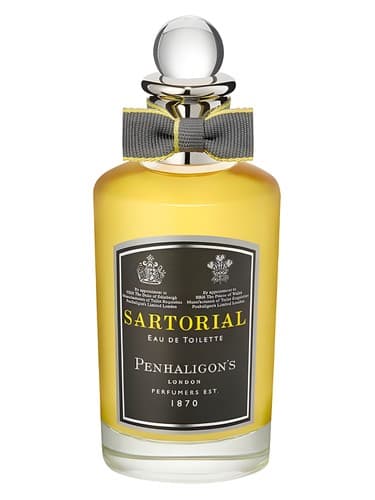
Sartorial by Penhaligon's is a Aromatic Fougere fragrance for men. Sartorial was launched in 2010. The nose behind this fragrance is Bertrand Duchaufour. Top notes are Metallic notes, Aldehydes, Cardamon, Water Notes, Black Pepper, Violet Leaf, Ginger and Neroli; middle notes are Lavender, Beeswax, Leather, Lime (Linden Blossom) and Cyclamen; base notes are Oakmoss, Honey, Woody Notes, Patchouli, Tonka Bean, Amber, White Musk, Vanilla, Myrrh, Cedar and Gurjan balsam. Penhaligon's launched a new fragrance for men, Sartorial, in Autumn 2010. Inspiration for its creation was the Savile Row bespoke tailor Norton & Son’s workshop. This complex fragrance of the fougere family was created by perfumer Bertrand Duchaufour. Sartorial Notes: aldehydes, ozonic effect, metallic effect, violet leaf, neroli, cardamom, black pepper, fresh ginger, beeswax, cyclamen, linden blossom, lavender, leather, gurjum wood, patchouli, myrrh, cedar wood, tonka bean, oakmoss, white musk, honey effect, old wood effect, vanilla, amber
Fragrance Notes
Top Notes
First impression (15-30 min)
Base Notes
Dry down (4+ hrs)
Accords
lavender
honey
woody
metallic
aromatic
fresh spicy
sweet
animalic
fresh
beeswax
When to Wear
Best Seasons
Time of Day
☀️Day20%
🌙Night12%
Where to Buy
This site contains affiliate links. As an Amazon Associate and partner of other retailers, we earn from qualifying purchases at no extra cost to you.
Community Review
The Smell of a Perfect Shave — Sartorial by Penhaligon's
The Verdict
Penhaligon's Sartorial arrived in 2010 from perfumer Bertrand Duchaufour with a brief that could easily have produced something generic: a quintessentially British barbershop fougere. What Duchaufour delivered instead was one of the more thoughtfully constructed aromatic compositions of its decade — a fragrance that the Fragrantica community has spent fifteen years calling "one of the all-time favourites" while increasingly qualifying that praise with concerns about newer bottles.
With over 2,700 votes and a 4.26 average, Sartorial sits confidently among the most respected entries in the Penhaligon's catalog. The community consensus is that it is "timeless, elegant, and definitely evokes the feeling of a dandy British gentleman" — which is a perfectly precise description of what it achieves.
What It Smells Like
The opening is metallic and aldehydic before it is anything else. Aldehydes and Metallic Notes arrive first — a slightly sharp, almost steel-and-pressed-linen quality that immediately references the barbershop concept without landing on the expected lavender-and-soap. Violet Leaf adds a cool, slightly sharp greenness, and Neroli provides citrusy lift. Pepper adds warmth and spice underneath. It is an opening that smells like the preparatory stages of a professional shave: the cold blade, the steam, the cedar-stropped razor.
One Basenotes reviewer captured it perfectly: "the amazing and wonderful smell of steam-pressed high end linen shirts; metallic, starchy, slightly chemical, clean." This is not conventional barbershop territory — it is something more specific and more interesting.
The heart develops as Lavender emerges with genuine quality. This is not the harsh, synthetic lavender of mass-market fougeres — it is smooth and fresh, slightly sweet, and it softens the metallic sharpness of the opening beautifully. Beeswax and Leather contribute warmth and a subtle animalic texture that gives the heart its depth. Honey threads through as a supporting note — present but restrained. The combination is "just as sharp, comfortable, and exceptionally fitted as a bespoke suit," as one reviewer put it.
The base brings Patchouli, Oakmoss, Cedar, Tonka Bean, Vanilla, Myrrh, and Gurjun Balsam in a layered foundation that is warm, slightly resinous, and traditionally structured. The drydown is classically elegant — smooth and green-woody with the honey and beeswax keeping it from becoming austere.
Comparisons to Invasion Barbare appear frequently in the community. The more precise framing: "Sartorial feels like you took Invasion Barbare as a whole and added warm, dark honey and myrrh notes to it, then gave the whole thing a very subtle metallic sheen." Sartorial is ultimately more interesting than Invasion Barbare — more character, more development.
When to Wear It
Spring, fall, and winter are the natural range — the metallic-aldehyde opening and lavender heart both perform better in cooler temperatures, and the warm base provides exactly the right kind of presence for cold-weather professional or formal contexts.
Summer wear is technically possible but the community steers against it. The warmth and honey in the base can feel heavy when ambient temperatures climb.
For the occasions it suits, Sartorial works remarkably well: a job interview, a formal dinner, a morning commute in autumn. It occupies that vanishing fragrance category — masculine but not aggressive, classic but not old-fashioned, distinctive but entirely appropriate.
Longevity & Projection
This is where Sartorial's reputation has become complicated in recent years. Historically, the fragrance was praised for solid 6-8 hour performance with pleasant moderate sillage. More recent community reports tell a different story.
Multiple Fragrantica forum members have noted that newer batches perform significantly worse. One reviewer reported a recent bottle was "gone well by 6 PM" with no one else able to detect it, calling the longevity "GARBAGE." This is not an isolated complaint — the thread format suggests several wearers have had similar experiences with recent purchases.
The conclusion is not that Sartorial has been fully reformulated, but that batch inconsistency is a real issue. Older bottles, or purchases from retailers with good stock turnover, appear to perform as expected. The performance question is now a variable rather than a reliable feature.
The Community Says
The praise for Sartorial is some of the most evocative in the Penhaligon's universe. One Basenotes reviewer described wearing it as "very deep and contemplative," being mentally transported to "a library stacked with old books floor to ceiling with no windows in an old damp building full of wooden decor" — calling it "the strongest sense of nostalgia I ever got from a fragrance." This kind of response — very specific, very emotional — comes up repeatedly.
The comparison to Penhaligon's 2025 release The Cut is worth noting. The community describes The Cut as "a younger, more freshie/herbal take designed for the up-and-coming go-getter," while Sartorial has "more suave and sangfroid gravitas." The Cut is described as "Kingsman; Sartorial is James Bond" — which is a useful framing for understanding what Sartorial's register actually is.
The primary concern beyond longevity is that some wearers find the opening too unusual — the metallic aldehyde introduction that makes it distinctive to enthusiasts can register as off-putting before the lavender heart settles in.
Who Should Buy This
Anyone with an appreciation for classic British masculinity in fragrance — the barbershop tradition executed with real sophistication and material quality. Sartorial is for the person who would wear a three-piece suit to a meeting when a sport coat would suffice, not because it's required, but because that's what the occasion deserves.
Skip it if you need reliable, modern-batch longevity without sourcing concerns, or if you prefer your lavender compositions without the metallic-aldehyde dimension. The unusual opening is worth sampling before committing to a bottle.
The Bottom Line
Sartorial is fifteen years old and still the standard against which Penhaligon's newer barbershop compositions are measured. Duchaufour's construction — the metallic-aldehyde opening, the quality lavender heart, the warm beeswax-honey base — remains genuinely distinguished within its genre. The reformulation and batch inconsistency concerns are legitimate and affect the purchasing calculus, but they do not change what the fragrance is when it performs correctly. When Sartorial works, it works beautifully: quintessentially British, classically masculine, and exactly as elegant as the name implies.
Consensus Rating
8.5/10
Community Sentiment
positiveSources Analyzed
15 community posts (7 Reddit) (8 forum)
This review is based on analysis of 15 community discussions. Individual experiences may vary.