About
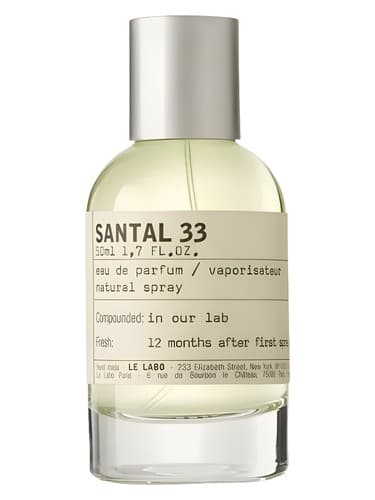
Le Labo introduced Santal 33 in 2011, a Woody Aromatic unisex fragrance crafted by Frank Voelkl. The composition features iris, sandalwood, cedar, amber, cardamom, violet, leather, papyrus.
Fragrance Notes
Accords
woody
powdery
leather
warm spicy
violet
When to Wear
Best Seasons
Time of Day
☀️Day20%
🌙Night14%
Where to Buy
This site contains affiliate links. As an Amazon Associate and partner of other retailers, we earn from qualifying purchases at no extra cost to you.
Community Review
Everyone's Heard of It. Half of Them Smell Pickles. — Santal 33 by Le Labo
The Verdict
Santal 33 is one of the most culturally significant fragrances of the past twenty years, and also one of the most divisive. Created by Frank Voelkl and launched by Le Labo in 2011, it achieved something rare: genuine crossover appeal between fragrance enthusiasts, fashion circles, and celebrity culture simultaneously. The New York Times famously asked whether it had become "the new second-hand smoke" after it became ubiquitous in downtown Manhattan. That sentence tells you as much about Santal 33 as any note breakdown. With 12,117 votes and a 3.76/5 average — a notably lower score than its cultural footprint suggests — community opinion is genuinely split. About 23% actively dislike it. Most of them smelled a jar of pickles.
What It Smells Like
Santal 33 is structured as a uniform accord rather than a conventional top-heart-base progression. Iris, Sandalwood, Cedar, Amber, Cardamom, Violet, Leather, and Papyrus are all listed as top notes — there's no traditional pyramid because the fragrance is designed to read as a single, continuous impression that evolves rather than transitions.
In practice: the opening is woody, smoky, and slightly mineral. The Cardamom provides an aromatic lift; Cedar and Sandalwood form the structural backbone; Leather adds a dry, almost papery texture; Violet and Iris contribute a soft powdery quality that prevents the composition from going too rugged. The overall effect is desert-like — dry, warm, open, with a slight cool mineral edge that's genuinely unusual.
Here's the complication: on a significant minority of noses, the Papyrus and accord chemistry produce a distinctly sour, fermented note that reviewers have consistently compared to pickles, kombucha, or vegetable juice left in the sun. "100% real" is how multiple Basenotes members describe the pickle effect. It's not a sign of a bad bottle — it's a genuine skin chemistry interaction that makes the fragrance smell entirely different on different people. This is why sampling before buying is non-negotiable.
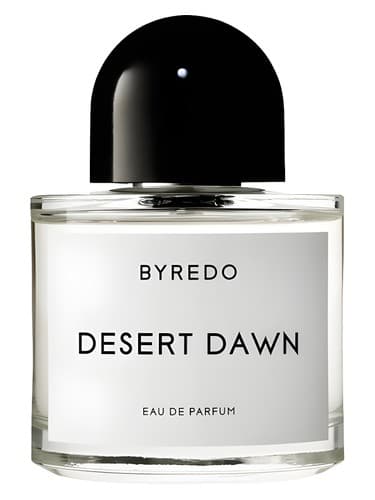
Community comparisons typically reference Iso E Super-heavy compositions, smoky wood fragrances like Byredo's Bal d'Afrique, and various cedar-dominant niche perfumes. Santal 33's specific combination of violet-powder and dry cedar is broadly described as unlike anything else available — which is its strongest argument.
When to Wear It
Fall through spring is the community consensus, with winter being its optimal season. The dry, smoky character amplifies in cold air and can feel harsh in summer heat. It's been worn in essentially every context — from board meetings to hiking trails — because its character is both distinctive and strangely versatile.
Longevity & Projection
The original formula was reportedly a performance powerhouse. The current formula is not. This is the community's main grievance beyond the divisive scent itself.
Pre-reformulation bottles reportedly lasted 8–10+ hours with genuine room presence and a sillage trail that lingered in spaces after you left. The current formulation delivers 4–6 hours on most skin types, with projection that becomes a skin scent within 2–3 hours. One enthusiast who still owns vintage stock reported smelling a single spray the next day; the same reviewer described the current formula as disappearing in a few hours.
The high price — Le Labo typically charges $200–$280 per bottle — makes the performance decline particularly frustrating to community members who loved the original. "For that price, it should last a week," as one Basenotes poster summarized with predictable exaggeration.
The Community Says
The devotees are fierce. "There is nothing else that smells exactly like Santal 33 — like it or not" captures the uniqueness argument. Those who connect with its desert-woody character often describe it as a transformative scent experience, the kind that alters how you think about what perfume can be. One reviewer gave it 8.5/10 on uniqueness alone.
The detractors are equally committed. "A jar of pickles left in tropical sun for three months" represents one extreme. More measured critics describe the current formula as papery and sour — technically interesting but unpleasant in practice. A considerable middle ground finds it overhyped for the price: "Nice enough, but not $260 nice."
The reformulation discussion is a community fixture. Long-time wearers who bought it in 2011–2015 describe it as one fragrance; those buying today are getting something quieter and shorter-lived.
Who Should Buy This
Santal 33 is for someone who has already sampled it and knows how it smells on their skin specifically. The pickle effect, the reformulation performance, and the price tag make it one of the riskiest blind buys in niche perfumery. If you've tried it and the dry wood-leather-violet accord spoke to you without any sour notes, it's a genuinely singular fragrance and the cultural cachet is real.
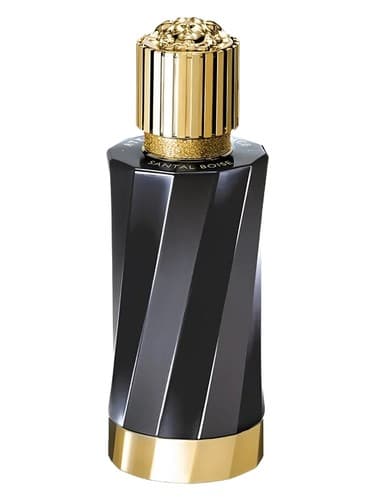
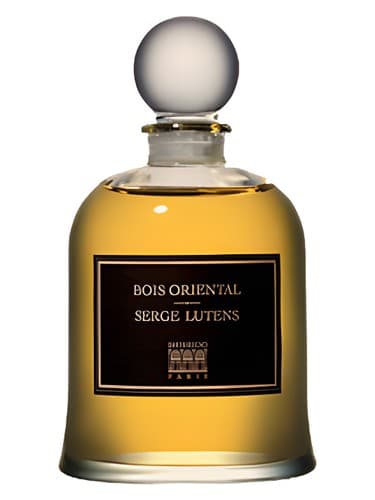
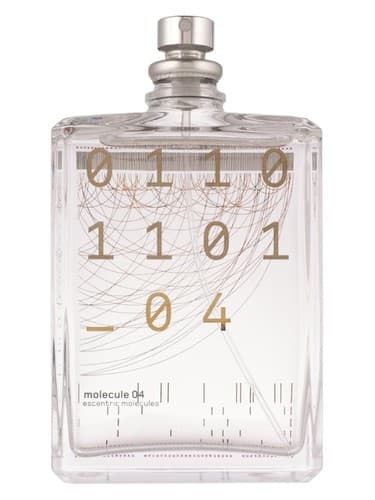
If you love the concept but want better performance, the community has mapped several alternatives at lower prices: Imaginary Authors' The Cobra & the Canary, various Maison Margiela Replica woody offerings, and Comme des Garçons woody compositions all get mentioned.
The Bottom Line
Santal 33 is simultaneously overrated and underrated — overrated as a blind buy, underrated as an achievement in fragrance construction. When it works on your skin, it's one of the most distinctive and conversation-generating fragrances available. When it doesn't, it's an expensive jar of pickles. The reformulation has taken something from the original's magic. The price is hard to justify on pure performance grounds. Sample first, sample thoroughly, and then decide.
Consensus Rating
7.2/10
Community Sentiment
mixedSources Analyzed
21 community posts (9 Reddit) (12 forum)
This review is based on analysis of 21 community discussions. Individual experiences may vary.