About
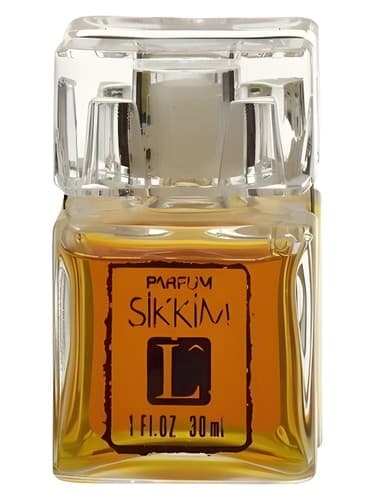
Lancôme introduced Sikkim Parfum in 1971, a Floral Aldehyde women's fragrance crafted by Robert Gonnon. The composition opens with gardenia, galbanum, bergamot, caraway, aldehydes. Carnation, iris, jasmine, narcissus, rose form the heart. The base resolves into vetiver, patchouli, oakmoss, amber, coconut, leather.
Fragrance Notes
Accords
aromatic
earthy
green
mossy
woody
leather
floral
rose
aldehydic
animalic
When to Wear
Best Seasons
Time of Day
☀️Day16%
🌙Night18%
Where to Buy
This site contains affiliate links. As an Amazon Associate and partner of other retailers, we earn from qualifying purchases at no extra cost to you.
Community Review
A Lost Masterpiece From the Golden Age of Chypre — Sikkim Parfum by Lancome
The Verdict
Lancome Sikkim Parfum is spoken of in hushed, reverent tones within the fragrance community, and for good reason. Created by Robert Gonnon in 1971 and named after the tiny Himalayan kingdom, this Floral Aldehyde chypre represents a style of perfumery that the mainstream industry has largely abandoned. It is bold, complex, unapologetically classical, and built on ingredients -- Oakmoss, Leather, Galbanum, Aldehydes -- that modern reformulation regulations have made increasingly difficult to use at full strength. On Fragrantica, where it carries an impressive 4.49 average from 233 votes, the reception borders on worshipful. On Basenotes, one reviewer declared it would make their desert-island top ten. This is not a fragrance that courts popularity. It demands attention, rewards patience, and belongs to a tradition of perfumery that values depth over accessibility.
What It Smells Like
The opening is an assault in the best possible sense. Aldehydes hit first -- cold, metallic, effervescent -- immediately followed by the sharp, green bite of Galbanum and the citrus warmth of Bergamot. There is a starchy, almost soapy quality to the first minutes that veteran chypre lovers will recognize instantly. Caraway adds a subtle spice note that tilts the opening toward something vaguely medicinal, while Gardenia provides a fleeting sweetness that prevents the top from being entirely austere. One Basenotes reviewer captured the experience perfectly: "The first sniff sends you reeling. Sikkim is fast, rough, and abundant. It is just everything at once."
The heart unfolds into a rich, classical floral bouquet. Rose and Jasmine provide the romantic core, but these are not the bright, clean florals of modern perfumery. They are deep, slightly indolic, and supported by Carnation with its clove-like spiciness, Iris with its powdery elegance, and Narcissus with its green, almost animalic depth. The overall effect is of a dense, formal floral arrangement -- the kind you might find in a grand hotel lobby rather than a spring garden.
The base is magnificent and long-lasting. Oakmoss provides the classic chypre foundation, earthy and dark. Leather is prominent and genuine -- not a soft suede whisper but a proper, slightly raw leather that reviewers compare to Germaine Cellier's Bandit and Gres Cabochard. Vetiver adds smoky earthiness, Patchouli contributes depth and darkness, and Amber provides warmth. There is even a subtle Coconut note that some reviewers detect in the drydown, adding an unexpected tropical sweetness that softens the overall severity. The complete base is described as "enchanting" -- a garden discovered deep in the woods, where wildness and cultivation coexist.
When to Wear It
Sikkim is a fragrance for occasions with gravity. Formal evenings, cultural events, opera, gallery openings, and any context where sophistication is the standard rather than the aspiration. This is not a casual fragrance, and attempting to wear it casually will feel like wearing a ball gown to the grocery store.
Seasonally, fall and winter are optimal. The density and richness of the composition need cool air to breathe properly. Spring evenings can work, but summer is out of the question -- the leather and oakmoss will become oppressive in heat.
The community heavily favors evening wear, though some experienced chypre lovers find it wearable during cooler daytime hours when they want to feel particularly put-together.
Longevity & Projection
Performance is exceptional, as you would expect from a true parfum concentration. Reviewers consistently describe the staying power as "incredible," with the fragrance lasting well beyond 12 hours on skin in its vintage formulation. Sillage is strong -- this is a fragrance that announces your arrival and lingers in a room after you leave. Even the La Collection reissue, which some find slightly tamer than the original, delivers remarkable endurance.
Like many classical chypres, Sikkim evolves dramatically over its wear time, eventually becoming a warm, intimate skin scent in the far drydown. The journey from the sharp, aldehydic opening to the soft, leathery base is part of the experience, and rushing through it by over-spraying would be a mistake. Two to three touches from the parfum bottle on pulse points is sufficient.
The Community Says
The fragrance community treats Sikkim with a level of reverence usually reserved for Guerlain classics or discontinued Chanel formulations.
On Fragrantica, one reviewer placed it "in the line of Miss Balmain and Dioressence" -- vintage chypres of the highest order -- calling it "a time travel back to the end of the 1960s, beginning of the 1970s." Another described it as smelling "like the baby of YSL Rive Gauche and the original Miss Dior," which, for chypre aficionados, is about as high a compliment as exists. A leather enthusiast called it "a must try for leather chypre lovers," noting the leather here is closer to Bandit than to modern suede-soft interpretations.
On Basenotes, the praise is equally fervent. One reviewer called it "a beautiful, understated chypre of a caliber all too rare nowadays," praising the "well-integrated leather note" that produces "a very smooth and enigmatic composition." Another described the non-linearity as a key strength: "delightfully raspy and acerbic to start, softening into an enchanting garden in the woods." A third reviewer contextualized it historically, tracing its roots to "the green chypres of Bandit and Miss Dior," and placing Sikkim alongside Chanel No. 19 and Silences as part of the broader green movement in perfumery.
Criticism is almost nonexistent, limited mainly to observations that the fragrance is "so distant from the fruity florals we know today" that many contemporary wearers might struggle to see it as a feminine fragrance. This is less a criticism and more a statement of historical reality.
Who Should Buy This
Sikkim is for the serious fragrance collector. If you are drawn to Bandit, Cabochard, Aromatics Elixir, Chanel No. 19, or Dioressence, Sikkim belongs on your shortlist -- and possibly at the top of it. It offers a unique combination of green sharpness, leather depth, and floral complexity that few fragrances from any era can match.
This is also a meaningful purchase for anyone interested in understanding what classical perfumery sounded like at its most confident. Sikkim is a teaching fragrance as much as a wearing fragrance -- every note serves a purpose, every transition reveals new information about how ingredients interact.
It is emphatically not for casual fragrance consumers, beginners looking for something approachable, or anyone who gravitates toward light, fresh, or fruity compositions. The gap between Sikkim and modern mainstream feminines is not a matter of degree but of kind. They are working from entirely different assumptions about what perfume should be and do.
For those interested in acquiring a bottle, the original 1971 formulation is the holy grail but extremely rare. The 2005 La Collection reissue is more findable and considered by experts to be remarkably faithful to the original. Vintage miniatures occasionally surface on auction sites and are worth grabbing when spotted.
The Bottom Line
Lancome Sikkim Parfum is a monument. It represents a pinnacle of the chypre tradition -- bold, complex, uncompromising, and utterly unlike anything the mainstream market produces today. The fragrance community's near-universal admiration is earned through sheer quality of composition and an emotional depth that transcends fashion. If you have the palate for it, Sikkim offers an experience that no modern release can replicate. It is one of those rare fragrances where the word "masterpiece" is not hyperbole but simple description.
Consensus Rating
8.8/10
Community Sentiment
positiveSources Analyzed
5 community posts (1 Reddit) (4 forum)
This review is based on analysis of 5 community discussions. Individual experiences may vary.