About
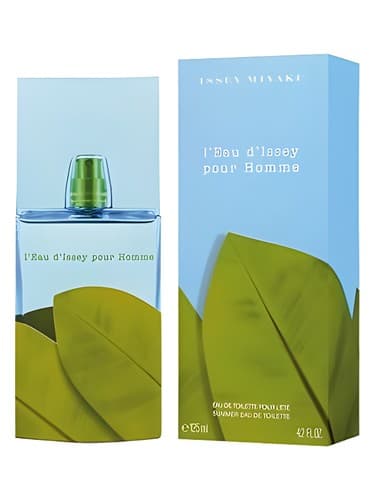
L'Eau d'Issey Pour Homme Eau de Toilette L'Ete is a Aromatic Aquatic men's fragrance from Issey Miyake, launched in 2012. The composition opens with mandarin orange, yuzu. Sage, cardamom, sea water form the heart. The composition settles on a base of vetiver, amber.
Fragrance Notes
Accords
citrus
aromatic
marine
green
sweet
salty
woody
When to Wear
Best Seasons
Time of Day
☀️Day32%
🌙Night5%
Where to Buy
This site contains affiliate links. As an Amazon Associate and partner of other retailers, we earn from qualifying purchases at no extra cost to you.
Community Review
A well-executed summer flanker of the iconic original, adding cardamom warmth to the signature yuzu-marine character with above-average longevity for a summer EDT.
The Verdict
L'Eau d'Issey Pour Homme Eau de Toilette L'Ete (2012) is one of the better summer flankers in the long-running Issey Miyake summer series. The parent fragrance — the 1994 original — is credited alongside cK One for fundamentally changing men's perfumery by proving that fresh, aquatic, clean fragrances could be iconic rather than simply functional. L'Ete doesn't reach that level of significance, but it's a genuinely pleasant and well-executed warm-weather companion that improves on some of the original's rough edges. The community reception is overwhelmingly positive (85% favorable), and the performance is better than "summer EDT" suggests.
What It Smells Like
The opening is immediately recognizable Issey Miyake territory: Yuzu and Mandarin Orange deliver the signature tart-bright citrus blast that made the original famous. The yuzu in this flanker is smooth rather than raw — less bitter than natural yuzu, more palatable, the version that functions as a welcome mat rather than a challenge. It's a comfortable, warm-weather opening that gets out of the way quickly.
Sea Water arrives in the heart alongside Sage and Cardamom, and this is where L'Ete distinguishes itself from the original. The cardamom adds a spicy warmth that the original lacked, giving the aquatic character some body and keeping it from feeling like straight-up aquatic fresh without personality. The sage is aromatic rather than culinary — it contributes a green, slightly herbal quality that works with the sea water to create a textured marine character. One reviewer described the experience on humid hot days as "the green notes really do help you feel fresh."
The base is Vetiver and Amber — a clean, warm foundation that anchors the aquatic-spice middle and ensures the fragrance doesn't simply evaporate. The vetiver adds earthy depth without heaviness, and the amber provides a gentle warmth in the final hours.
The composition skews synthetic — one reviewer called it "a TOTAL synth aromachemical BOMB" — but that's both accurate and not necessarily a problem. Modern aquatic fragrances are largely built from synthetic materials, and the question is whether those materials are used skillfully. Here, they are.
When to Wear It
This is peak summer territory. The community is emphatic: 32% vote it a day fragrance versus 5% for night, one of the most lopsided daytime-skewing scores in the Issey Miyake catalog. It's at its best when it's warm out and you want to feel clean and fresh without effort — humid beach days, outdoor lunches, morning commutes when the heat is already building. It functions fine at the office during summer months, where the marine-citrus character reads as appropriately clean rather than casual.
Longevity & Projection
Here's where L'Ete surprises. Summer flankers often trade performance for lightness, but this one holds up better than the category would suggest. Multiple reviewers report that two to three sprays last through a full working day, with the scent still detectable on clothes the following day. The projection is moderate — not a room-filler, but more than a skin scent. One reviewer specifically noted: "Don't go thinking that because it's labelled as EDT and for summer, it will be weak or won't last long."
Fragrantica community ratings confirm above-average performance for the style: the combination of vetiver and amber in the base helps anchor the more volatile top notes and extends the wear beyond what you'd expect from a summer EDT.
The Community Says
The 85% favorable rate (44% love, 41% like) is one of the more decisive community verdicts in the Issey Miyake summer lineup. Fans of the original are the primary audience, and they tend to find L'Ete a welcome variation rather than a diluted copy. The cardamom-spiced sea water heart is consistently mentioned as the interesting addition — "the original composition is spiced with cardamom and warmed with amber," as one reviewer summarized approvingly.
The minority critical position focuses on the synthetic character: "extremely cloying and synthetic, and way too floral for my tastes" in one particularly strong negative reaction. This is a real consideration — if you dislike the family of aromatic chemicals common in modern aquatics, L'Ete won't win you over. Those who've made peace with or actively enjoy that aesthetic will be fine.
The comparison to niche summer fragrances also recurs: "it's not far off some summer-themed niche fragrances in terms of lasting power," which speaks to the value proposition at designer pricing.
Who Should Buy This
The clearest candidate is an existing owner of the original L'Eau d'Issey Pour Homme who wants a warm-weather companion. L'Ete has enough of the parent's DNA to feel familiar while adding sufficient distinctiveness — particularly the cardamom-spiced heart — to justify owning both. Beyond that core audience: anyone who embraces citrus-marine fragrances for summer wear and wants performance without going niche. The price is reasonable, the format (typically 125ml) is generous, and the performance exceeds what the category usually delivers.
The Bottom Line
L'Ete is a solid warm-weather fragrance that earns its positive community reception honestly. It's not a landmark fragrance — it doesn't need to be — but it's well-executed, genuinely pleasant in hot weather, and performs better than a summer EDT has any business doing. If you like Issey Miyake's signature citrus-aquatic character and want a version optimized for summer, this is the one.
Consensus Rating
8.2/10
Community Sentiment
positiveSources Analyzed
5 community posts (1 Reddit) (4 forum)
This review is based on analysis of 5 community discussions. Individual experiences may vary.