About
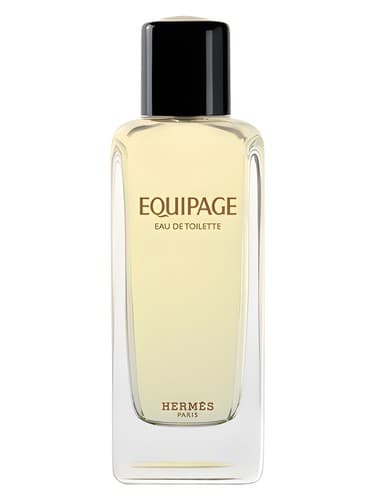
Hermès introduced Equipage in 1970, a Oriental Fougere men's fragrance crafted by Celine Barel. The composition opens with nutmeg, bergamot, orange, tarragon, brazilian rosewood, clary sage, aldehydes, marjoram. The heart features carnation, jasmine, cinnamon, lily-of-the-valley, pine tree, hyssop, liatrix. The composition settles on a base of vetiver, musk, patchouli, oakmoss, amber, tonka bean, vanilla.
Fragrance Notes
Accords
aromatic
woody
warm spicy
earthy
fresh spicy
citrus
floral
mossy
sweet
balsamic
When to Wear
Best Seasons
Time of Day
☀️Day23%
🌙Night13%
Where to Buy
This site contains affiliate links. As an Amazon Associate and partner of other retailers, we earn from qualifying purchases at no extra cost to you.
Community Review
Pine Trees, Horse Stables, and October — Equipage by Hermès
The Verdict
Equipage is a 1970 creation by Guy Robert — the same perfumer responsible for Hermès Calèche and Rochas Madame Rochas — and it stands as one of the defining masterpieces of classic masculine aromatic perfumery. Fifty-six years after its creation, it remains in the Hermès catalog, which is itself a statement about the quality and endurance of the formula.
The name refers to horse-drawn carriages — équipage in French — and the fragrance honors that reference with an earthy, woody, leather-adjacent character that evokes riding through autumn forests rather than contemporary grooming products. This is old-world perfumery executed at the highest level.
The community gives it over 1,470 votes and a rating that places it among the most respected classics in masculine fragrance. The caveat — which the community raises consistently and seriously — is reformulation. The original Equipage contained oakmoss as a foundational note. IFRA restrictions have removed it from modern formulations, and the community is largely in agreement that something fundamental left with it.
What It Smells Like
The vintage opening is a stunning aromatic complexity: clary sage and rosewood alongside bergamot, tarragon, and marjoram — a swirling, herbal, slightly camphor-tinged entrance that is both authoritative and graceful. The character is unmistakably masculine in the classical sense: aromatic, clean-woody, without sweetness or synthetic freshness.
The heart builds around carnation and pine needles — the carnation providing a warm, slightly clovey floral spice, the pine contributing a cool, resinous woody quality. Cinnamon weaves through this stage, adding warmth without sweetness. Lily of the valley appears briefly, softening the composition without feminizing it. The combination is distinctly equestrian in character — not cologne-sweet but stable-adjacent, woody and slightly animalic in the best sense.
The base is where vintage and modern diverge. Original Equipage: vetiver, patchouli, oakmoss, amber, tonka bean, coumarin together in a deep, mossy, earthy foundation that the community describes as the structural core of the fragrance's identity. Modern Equipage: the same formula with oakmoss reduced to near-absence under IFRA restrictions. The result, per the community, is a drier, more austere base that lacks the forest-floor quality the original possessed.
Both versions retain the essential character of the fragrance. The vintage is arguably the superior experience; the modern is still excellent by any objective standard.
When to Wear It
Fall is Equipage's season. The aromatic herbal opening, the carnation-pine heart, the earthy base — all of it aligns with cool air, falling leaves, and the sensory world of October. The community description of "walking through pine trees to a horse stable on a cool October afternoon" is not marketing language — it's an accurate olfactory map.
Spring and winter also work. Summer is the exception — heat amplifies the camphor elements into something unwelcoming, and the composition loses its refinement.
Day wear, office, and business settings are ideal. The projection is discreet enough for professional environments; the character communicates substance rather than flashiness.
Longevity & Projection
6 to 10 hours with moderate projection. Equipage is not a loud fragrance — the community's characterization of it is telling: "a fragrance you don't smell — you sense nearby." This is a discreet but persistent presence rather than a broadcasting one. Two to three sprays is appropriate; more risks making the camphor element aggressive.
The vintage formula reportedly projects and lasts somewhat better than current production, though both are solid performers.
The Community Says
The reverence in community discussion reflects 50-plus years of accumulated opinion from fragrance enthusiasts who have worn both vintage and modern formulations. "Equipage is one of those fragrances you don't smell — you sense nearby" captures the approach perfectly: this is a fragrance built for presence rather than announcement.
The most quoted community description — "walking through pine trees to a horse stable on a cool October afternoon" — appears with enough frequency to constitute consensus on what the fragrance actually smells like in lived experience.
The reformulation grief is genuine and measured rather than hyperbolic: "take out the oakmoss and something fundamental is missing." The community doesn't claim the modern version is bad; it claims the original was better, and that the difference matters at a qualitative level that's difficult to fully compensate for.
Who Should Buy This
Equipage is essential for anyone building a serious masculine fragrance wardrobe with historical depth — an understanding of where aromatic perfumery came from before the aquatic and fresh categories came to dominate. It works exceptionally well for those who have grown tired of contemporary masculines that all read as some variation of shower gel and cedar.
For modern wearers accustomed to fresh aquatics or sweet masculines, Equipage is a significant departure. Sample before buying if your frame of reference is primarily 2000s-and-newer fragrance.
Skip it if: you strongly dislike herbal or camphor-adjacent notes; you need something that generates compliments from mainstream audiences; or you're buying vintage on the secondary market without verifying authenticity — the premium on pre-IFRA bottles has attracted significant counterfeiting.
The Bottom Line
Equipage is one of the great masculine fragrances — full stop. Guy Robert built something in 1970 that still stands as a masterclass in aromatic fougère structure, and Hermès has maintained it in their lineup because the quality of the composition demands it. The oakmoss loss is real and the community is right to mourn it. The modern version remains excellent. Find it, wear it in October, and understand why 1970 produced fragrance that has outlasted nearly everything made since.
Consensus Rating
8.5/10
Community Sentiment
positiveSources Analyzed
9 community posts (5 Reddit) (4 forum)
This review is based on analysis of 9 community discussions. Individual experiences may vary.