About
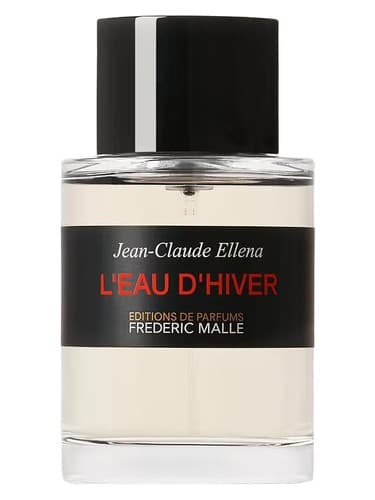
Frederic Malle introduced L'Eau d'Hiver in 2003, a Floral Woody Musk unisex fragrance crafted by Jean-Claude Ellena. The composition opens with bergamot, grapefruit, lemon, pink pepper, green notes, calamus. The middle unfolds with iris, jasmine, orange blossom, ylang-ylang, hawthorn, heliotrope, rose, lily-of-the-valley, violet, honey. The base resolves into musk, sandalwood, cedar, angelica, amber, benzoin, tonka bean, hay.
Fragrance Notes
Top Notes
First impression (15-30 min)
Middle Notes
Heart of the fragrance (2-4 hrs)
Base Notes
Dry down (4+ hrs)
Accords
musky
powdery
citrus
floral
fresh spicy
violet
sweet
green
When to Wear
Best Seasons
Time of Day
☀️Day25%
🌙Night8%
Where to Buy
This site contains affiliate links. As an Amazon Associate and partner of other retailers, we earn from qualifying purchases at no extra cost to you.
Community Review
A Watercolor Painting You Wear on Your Skin — L'Eau d'Hiver by Frederic Malle
The Verdict
The name translates to "Winter Water," but do not expect a heavy cold-weather blanket. L'Eau d'Hiver is Jean-Claude Ellena at his most refined -- a fragrance that barely seems to be there until you lean in and discover an entire world of powdery florals, almonds, and honeyed warmth. Released in 2003 under Frederic Malle's Editions de Parfums label, it was directly inspired by Guerlain's legendary Apres l'Ondee, reimagined through Ellena's signature minimalist lens. With nearly 3,900 community votes and an 84% love-or-like ratio (46% love, 38% like), it has quietly built one of the most devoted cult followings in niche perfumery.
What It Smells Like
Describing L'Eau d'Hiver is like describing a whisper. The opening offers a gentle brush of Bergamot, Lemon, and Grapefruit alongside a subtle warmth from Pink Pepper and an herbal thread of Calamus and Green Notes. This is not a citrus burst -- it is a citrus suggestion, transparent and fleeting.
The heart is where the magic lives, and it is a complex web of florals that somehow reads as simple. Heliotrope is the soul of this fragrance -- powdery, almond-scented, slightly sweet, like marzipan left out in the rain. Hawthorn adds a delicate, almost medicinal floralcy. Iris contributes its characteristic cool powder. Violet, Lily-of-the-Valley, Rose, Jasmine, Orange Blossom, and Ylang-Ylang are all present in the notes list, but they merge into what the community describes as an abstract, impressionistic floralcy rather than distinct identifiable flowers. A touch of Honey gives warmth and sweetness without stickiness.
The base is soft and enveloping: White Musk provides a clean skin-scent quality, Tonka Bean and Benzoin add sweet, vanillic warmth (though Ellena insisted on keeping it intentionally dry -- "absolutely no vanilla"), Sandalwood and Cedar offer quiet woody support, and Hay contributes a dried-grass sweetness that evokes the last warm day before autumn turns to winter. Amber and Angelica round out the foundation.
The result, as one community member memorably described it, is "a dewy heliotrope after a rain -- ethereal, lightly powdery and a small hint of sweetness."
When to Wear It
Despite the name, the community does not see this as a traditional winter fragrance. Spring leads the seasonal votes at 25%, followed by winter at 19% and fall at 14%. It is overwhelmingly a daytime fragrance (25% day versus 8% night), which suits its gentle, office-friendly character.
One Basenotes reviewer articulated the seasonal paradox perfectly: this fragrance "is not made for winter, but rather made of winter. It is a cold breeze on the face, fleeting ephemeral wisps of chill florals underpinned by musks." In practice, it works year-round because it carries winter's quiet beauty into any season. Many owners find it particularly lovely in spring and summer, where its cool, transparent quality provides a refreshing contrast to warm air.
Longevity and Projection
This is where L'Eau d'Hiver divides its audience most sharply, and the conversation is worth parsing carefully.
The frustrated camp reports near-invisible performance: "Even if it is three sprays on the same spot, there is no sillage or longevity. It does not project." Another called its longevity "abysmal" and "criminal" for the price.
The satisfied camp tells a different story: one Basenotes reviewer found "slightly less than twelve hours" of longevity with "two hours of good projection before becoming a skin scent." Another reported eight hours with moderate sillage. A Parfumo reviewer noted one spray was "still noticeable up close after seventeen hours."
The truth likely depends on skin chemistry and expectations. L'Eau d'Hiver is not designed to project. It is designed to exist as a personal, intimate scent -- gentle whiffs that float up here and there throughout the day. If you measure a fragrance by how many people in a room can smell it, you will be disappointed. If you measure it by the quiet pleasure of catching it on your own wrist hours later, you may find it extraordinary.
The Community Says
The 84% positive reception is impressive for a fragrance this subtle, and the reviews tend toward the poetic. One devoted Basenotes reviewer wrote: "Every time I wear it, I appreciate it more. There is so much complexity hiding inside it." Another concluded that Ellena "was undoubtedly at the top of his game when he composed this one."
Olfactoria's Travels described it as "a very elegant, understated and muted perfume -- it smells round and smooth like a snowball. It is not cold, but not hot either, it has warmth, but not overwhelmingly so, it is flowery and sweet and fresh, everything in moderation and everything perfectly balanced."
The comparison to Guerlain's Apres l'Ondee is inevitable and frequent. The community generally agrees that L'Eau d'Hiver takes the heliotrope-hawthorn-violet DNA of the Guerlain classic and strips it of its spices, adding modern transparency and airiness. Where Apres l'Ondee feels melancholy and autumnal, L'Eau d'Hiver feels cooler, cleaner, more cerebral.
The criticism, beyond performance complaints, centers on the intellectual nature of the composition. Some Basenotes members describe it as "purely an intellectual exercise" rather than a fragrance of beauty or emotion, leaving them uncertain when or where they would actually want to wear it. Others find it "a bit insubstantial" for noses accustomed to richer, more complex compositions.
Who Should Buy This
L'Eau d'Hiver is for the experienced fragrance wearer who has tried the loud ones, the sweet ones, and the attention-grabbers, and now wants something that exists purely for personal pleasure. If you appreciate Hermes's house style (unsurprising, given Ellena's later tenure there), if you find beauty in restraint, and if you do not require external validation from your fragrance, this may become a deeply cherished bottle.
It makes an exceptional office fragrance precisely because no one will notice it except you, and it layers beautifully with other scents for those who want to build complexity.
Skip it if projection matters to you, if you need to justify the substantial Frederic Malle price tag with sillage and compliments, or if you prefer fragrances with clear, identifiable note progression. Also skip it if the comparison to Apres l'Ondee means nothing to you -- this fragrance speaks most deeply to those who have some context for what Ellena was responding to.
The Bottom Line
L'Eau d'Hiver is the rare fragrance that rewards patience, attention, and repeated wearing. It is not trying to impress anyone -- it is trying to be perfect at a very specific thing, and most of the community agrees it succeeds. Jean-Claude Ellena created a fragrance that smells like the memory of winter: soft, powdery, almond-sweet, and achingly beautiful in its quietness. Whether that is worth the Frederic Malle price depends entirely on whether you believe a whisper can be more powerful than a shout.
Consensus Rating
8/10
Community Sentiment
positiveSources Analyzed
11 community posts (5 Reddit) (6 forum)
This review is based on analysis of 11 community discussions. Individual experiences may vary.