About
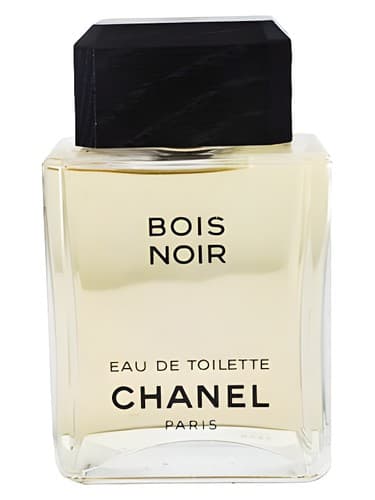
Jacques Polge created this aromatic fougère masculine fragrance for Chanel in 1987. The composition represents the house's exploration of the classic men's fougère tradition through its own refined lens.
Fragrance Notes
Top Notes
First impression (15-30 min)
Accords
woody
aromatic
rose
lavender
floral
citrus
powdery
balsamic
musky
vanilla
When to Wear
Best Seasons
Time of Day
☀️Day13%
🌙Night21%
Where to Buy
This site contains affiliate links. As an Amazon Associate and partner of other retailers, we earn from qualifying purchases at no extra cost to you.
Community Review
A legendary 1987 Chanel rarity by Jacques Polge that served as the darker, richer prototype for Egoiste, revered by vintage collectors for its magnificent sandalwood and spiced rose but nearly impossible to find authentically.
The Verdict
Chanel Bois Noir holds a unique position in fragrance history as a splendid commercial failure that gave birth to one of the most celebrated men's fragrances of the twentieth century. Jacques Polge created this aromatic fougere in 1987 as an ambitious composition meant to inaugurate Chanel's hyper-exclusive fragrance line. It was sold only in Chanel boutiques in France, then rolled out as a limited edition in the United States to test its marketability to a wider audience.
When it failed to sell, Polge revised the formula based on feedback, and in 1990 the world received Egoiste. The critical consensus among those who have experienced both is that Bois Noir is the darker, richer, more uncompromising original -- a matte-finish version of what became Egoiste's polished sheen. Today, genuine bottles are among the most coveted and frequently counterfeited vintage fragrances in existence.
What It Smells Like
The opening begins with sweet mandarin alongside a distinctive smoky quality that immediately signals this is something different from conventional men's fragrances of the late 1980s. The citrus has likely faded considerably in surviving bottles due to decades of aging, but when fresh, it provided a bright counterpoint to the darkness that followed.
The heart is where Bois Noir reveals its magnificent character. Rose takes center stage, rendered in a darker, more syrupy and smoky manner than in Egoiste. Lavender joins the rose with an aromatic herbaceousness that bridges the floral heart and the woody base. Coriander adds a peppery spice that gives the composition a slightly exotic quality. The rose-lavender-coriander combination is what many reviewers describe as distinctly masculine in a way that modern fragrances rarely attempt.
The base is where collectors truly rhapsodize. Sandalwood -- real Mysore sandalwood, used generously in quantities that would be cost-prohibitive today -- anchors the composition with a creamy, rich woodiness. Bourbon vanilla rounds the wood with warmth, while rosewood adds a subtle, refined floralcy. Ambrette seed contributes a delicate muskiness. The Now Smell This review described it as "richer and smelling like parfum to Egoiste's eau de toilette," with a stronger dose of scarce ingredients.
When to Wear It
Bois Noir is inherently an evening fragrance for cooler months. Its dark, spiced, woody-floral character was designed for fall and winter, where the rich sandalwood and vanilla base can radiate warmth without becoming heavy. Formal events, sophisticated dinners, and any occasion calling for quiet confidence would be ideal settings.
Of course, this discussion is largely theoretical given the extreme rarity of genuine bottles. Those fortunate enough to own one would be forgiven for saving it exclusively for the most special occasions.
Longevity & Projection
Vintage reviews suggest that Bois Noir delivered excellent longevity when fresh, consistent with the generous use of high-quality sandalwood and vanilla in the base. The Now Smell This review noted that with doubled application of Egoiste, the two fragrances became difficult to distinguish, suggesting comparable projection and lasting power. The warm, woody-spicy character has the density to persist for many hours, projecting with moderate but confident sillage. Surviving bottles, however, will have diminished performance compared to when they were new, as three-plus decades of aging affects all fragrances.
The Community Says
The community regards Bois Noir with a mixture of reverence and practical skepticism. The Scented Devil blog provided one of the most detailed analyses, describing it as "just a darker, matte-finish and marginally manlier version of what became Egoiste." The P-Article noted that Bois Noir was described as a splendid but major commercial flop due to its exclusive distribution. Now Smell This warned that "fake Bois Noir is often for sale online" and recommended simply enjoying Egoiste rather than pursuing the prohibitively rare original. Basenotes, Fragrantica, and Parfumo all contain discussions from collectors and historians, with the consensus that Bois Noir is a fascinating historical artifact that helped produce a masterpiece.
Who Should Buy This
Bois Noir is exclusively for serious vintage fragrance collectors and Chanel historians who have the knowledge to authenticate bottles and the budget to afford them. If you deeply love Egoiste and want to understand its genesis, experiencing Bois Noir -- even a diminished vintage sample -- provides irreplaceable context.
For everyone else, the practical recommendation is clear: enjoy Egoiste, which remains readily available and captures the essential spirit of Polge's original vision in a more accessible, better-preserved form.
The Bottom Line
Chanel Bois Noir is a magnificent historical rarity -- the darker, richer prototype that Jacques Polge refined into Egoiste. Its superior sandalwood, smoky rose, and spiced warmth represent a moment when Chanel attempted something uncompromisingly bold for men and the market was not ready. The fragrance itself is among the finest woody-spicy compositions of its era, but its extreme scarcity and rampant counterfeiting make it a collector's quest rather than a practical purchase. The best way to appreciate Bois Noir may be to spray Egoiste generously and imagine what it once sounded like at full volume.
Consensus Rating
7.8/10
Community Sentiment
positiveSources Analyzed
4 community posts (3 Reddit) (1 forum)
Pros
- + Magnificent woody-spicy composition with superior ingredient quality
- + Richer and more refined than its successor Egoiste
- + Historically significant as a rare Chanel failure that birthed a classic
- + Outstanding sandalwood, lavender, and rose interplay
Cons
- - Virtually impossible to find -- produced for barely one year
- - Rampant counterfeiting with aged Egoiste sold as Bois Noir
- - No practical way to sample or purchase with confidence
- - Vintage bottles have lost citrus top notes to decades of aging
Best For
evening wearformal eventscold weather outingsspecial occasions
Best Seasons
fallwinter
This review is based on analysis of 4 community discussions. Individual experiences may vary.