About
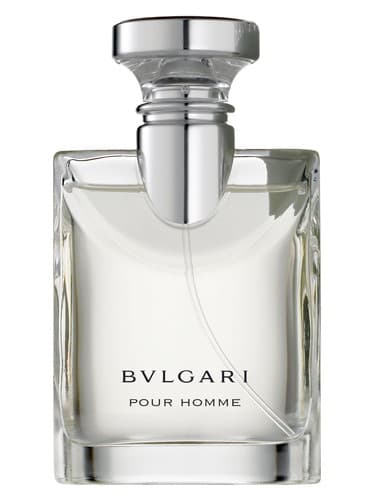
Bvlgari introduced Pour Homme in 1996, a Woody Floral Musk men's fragrance crafted by Jacques Cavallier Belletrud. The composition opens with lavender, orange blossom, nutmeg, bergamot, mandarin orange, tea, aldehydes. A heart of carnation, iris, geranium, guaiac wood, cardamom, coriander, brazilian rosewood, pepper, cyclamen follows. The base resolves into vetiver, musk, oakmoss, cedar, amber, tonka bean.
Fragrance Notes
Top Notes
First impression (15-30 min)
Middle Notes
Heart of the fragrance (2-4 hrs)
Accords
woody
fresh spicy
aromatic
musky
citrus
green
powdery
fresh
aldehydic
earthy
When to Wear
Best Seasons
Time of Day
☀️Day26%
🌙Night9%
Where to Buy
This site contains affiliate links. As an Amazon Associate and partner of other retailers, we earn from qualifying purchases at no extra cost to you.
Community Review
The Tea That Started a Genre — Pour Homme by Bvlgari
The Verdict
Released in 1996 and crafted by Jacques Cavallier Belletrud, Bvlgari Pour Homme is one of the quietly influential fragrances in men's perfumery — a scent that didn't merely use tea as a note but made tea the entire raison d'être of the composition. It won Fragrance of the Year – Men's Luxury at the Fragrance Foundation Awards in 1997, and nearly three decades later it still anchors Bvlgari's masculin lineup. On Fragrantica it holds a 4.16 average with 2,669 votes, and the split breaks down to a remarkable 42% love it and 42% like it — a near-unanimous approval from those who've spent time with it. What it lacks in loudness, it more than compensates for in character.
What It Smells Like
The opening is a softly aromatic citrus signature: bergamot, mandarin orange, orange blossom, and lavender are joined by a touch of nutmeg and aldehydes — classic constructions that create a clean, refined introduction. But the signature arrives almost immediately: the tea note that defines this fragrance and inspired an entire lineage of tea-forward masculines. It's not a sweet iced-tea interpretation. It's a genuine, dry, slightly astringent black tea accord — the smell of a fresh pot of leaves steeping in a room that also contains wood and paper. It's sophisticated, quiet, and completely unlike anything that existed before it in mass-market masculine perfumery.
The heart layers iris, carnation, geranium, cardamom, coriander, cyclamen, and guaiac wood into a subtle, slightly powdery, spiced floral structure that keeps the tea accord interesting through the wear. Nothing overpowers anything else — this is composition by restraint. Brazilian rosewood and pepper add a small amount of depth and warmth that keep it from becoming purely linear.
The base is classic masculine structure: vetiver, cedar, oakmoss, amber, musk, and tonka bean create a clean, slightly earthy, warm foundation that settles into a skin scent of real quality. The overall impression throughout the dry-down is of clean skin wearing something considered and tasteful — woody, slightly earthy, tea-infused, never calling attention to itself.
When to Wear It
Pour Homme was made for spring and summer days, and it performs best there. The tea accord reads as refreshing in the heat without being aquatic or generic. It's an office fragrance through and through — the kind of scent that colleagues notice when they're close enough to say "you smell good" without being able to identify the specific source. Daytime, work environments, casual social situations, warm weather — these are its native habitats.
It's not an evening fragrance. The projection is too intimate for occasions that call for presence, and the dry, woody character doesn't have the depth that cold-weather environments reward. Fall can work if temperatures are mild. Full winter is not its season.
Longevity & Projection
This is where honesty is required. Pour Homme is not a powerhouse. Community reports consistently flag weak-to-moderate longevity — most wearers get 4-6 hours, often less in hot weather. The sillage is close to skin, which the community has variably described as elegant restraint and disappointing underperformance, depending on what they were expecting. "Not made to catch attention, but to be remembered by those close to you" is how one enthusiast framed it, and that's the appropriate expectation to set.
Three to four sprays on pulse points is recommended, with clothing application extending wear time significantly. Bvlgari released a 2024 Eau de Parfum reformulation that reportedly addresses some of the longevity concerns — worth considering for those who love the profile but need more staying power.
The Community Says
The community divides cleanly on this one based on fragrance philosophy. Those who prefer bold, loud, projecting fragrances find Pour Homme underwhelming — the tea note is described as "too bitter and flat" by some, and the weak projection is a recurring complaint. The tea accord is specific and doesn't appeal universally.
Those who embrace it tend to do so completely. "Among my favorite tea scents even amidst the many niche tea offerings" is a sentiment that appears regularly, high praise given how many expensive niche houses have tried to do what Pour Homme does. "A perfect daily scent if you like the tea note and the vetiver" — the key qualifier being that you need to actually like the tea note, because it dominates. Fragrance enthusiasts who appreciate subtlety and sophistication over volume describe it as a signature-quality scent: recognizable to those close enough, invisible to everyone else.
The overlooked-classic framing comes up often — "Pour Homme gets slept on" from those who think its place in fragrance history isn't reflected in its mainstream recognition.
Who Should Buy This
Pour Homme is for the person who wants a fragrance that functions as an extension of good taste rather than a statement. Tea lovers, office wearers, those who appreciate classic masculine structure without sweetness — this was made for you.
Skip it if: you need projection, you dislike tea notes (which are non-negotiable here), you want an evening fragrance, or you're buying for colder climates. The performance ceiling is simply lower than many alternatives at this price point.
The Bottom Line
Bvlgari Pour Homme is a genuine classic that helped define an entire category of men's fragrance. The tea accord is singular — there's nothing in mass-market masculines that smells quite like it, and nearly 30 years later that remains true. Its weaknesses are real (modest longevity, limited cold-weather performance, close projection), but for what it is — an office-appropriate, warm-weather, quietly sophisticated tea fragrance — it delivers with a clarity that younger competitors still struggle to match. The 2024 EDP suggests the story isn't finished yet.
Consensus Rating
8.3/10
Community Sentiment
positiveSources Analyzed
13 community posts (6 Reddit) (7 forum)
This review is based on analysis of 13 community discussions. Individual experiences may vary.